
Raising Children in North America: Insights from a Parenting Workshop


A meaningful and inspiring evening for our community.
Over 50 parents joined our virtual workshop on Raising Children in North America, led by Senait Litchmore, RP, where families engaged in important conversations around parenting, communication, teenage development, culture, identity, and emotional wellbeing.
The strong participation and honest discussions highlighted the growing need for safe community spaces that support both parents and youth. Thank you to everyone who attended and contributed to this important conversation.
Together, we continue building stronger families, confident children, and healthier communities.
Summary Parenting Emotional Regulation Workshop
Yonatan introduced a parenting workshop focused on emotional regulation, communication tools, and strengthening parent-child connections, featuring therapist Senait Lichmore as the presenter. Senait began her presentation by explaining that parents need to regulate their emotions before effectively parenting their children, using the example of a tired parent reacting harshly to children's questions about dinner. She introduced the concept of the "connected brain" versus the "stress survival brain," explaining that when parents are connected to their mind and body, they can respond thoughtfully rather than react emotionally to their children's requests.
Stress Management in Parenting
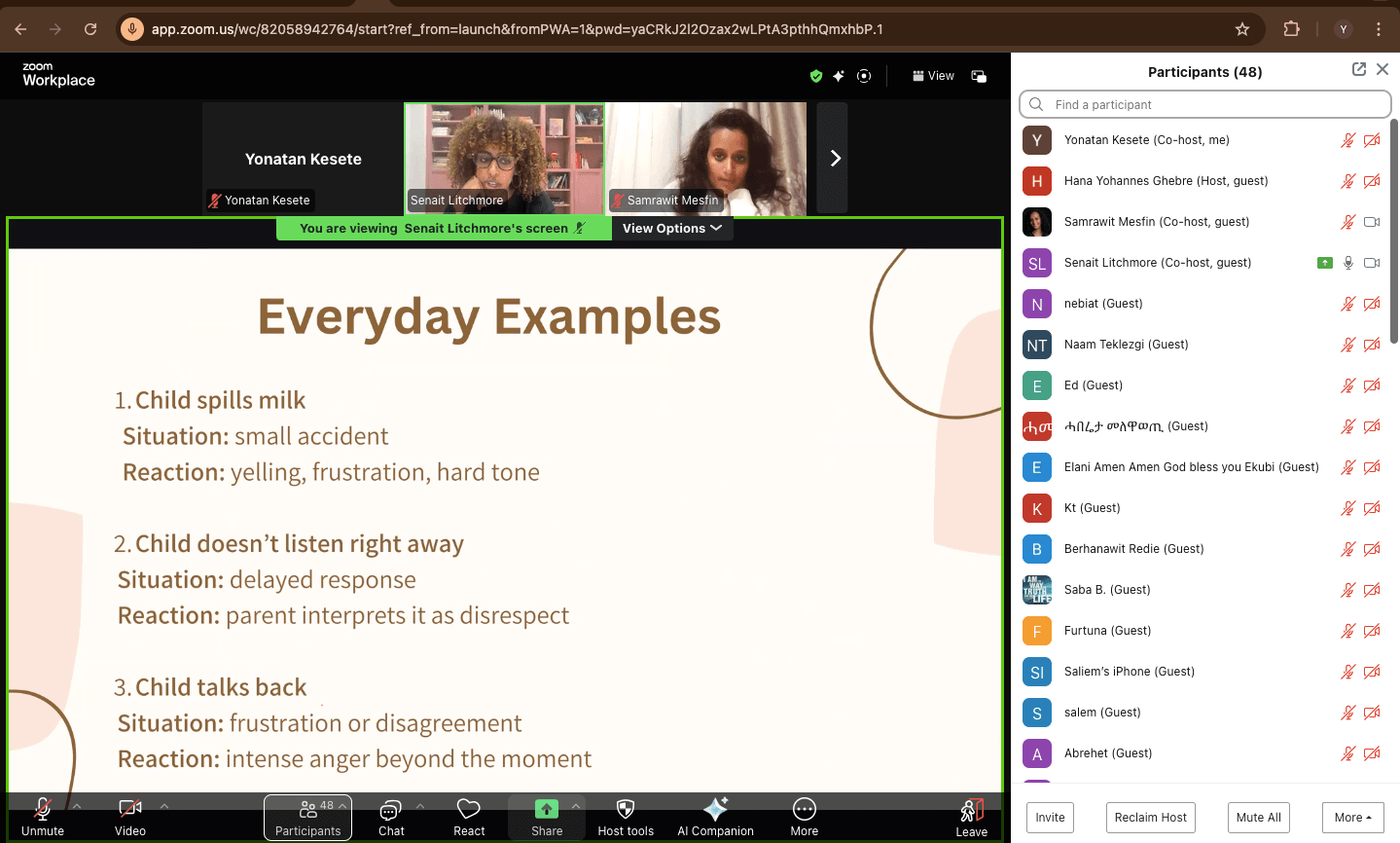
Senait led a discussion on managing stress and survival brain responses, emphasizing the importance of recognizing when one is in a stress survival state and the impact of past experiences on current parenting. She encouraged participants to be kind to themselves and focus on showing themselves grace rather than seeing past traumas as defining their parenting abilities. The conversation then moved to discussing triggers, with Senait providing examples of situations where responses might not match the actual situation, such as a child spilling milk or not following instructions immediately.
Parenting Triggers and Responses
Senait discussed the concept of triggers in parenting, explaining how past experiences can cause intense reactions to seemingly minor situations, using examples like children talking back or spilling milk. She noted that triggers can happen even when calm and stressed that the main difference is how they are reacted to. Senait wrapped up the discussion by introducing the topic of connecting with children before correction, indicating a deeper exploration of this concept in the future.
Effective Parenting Connection Strategies
Senait led a discussion on effective parenting strategies, focusing on connecting with children before correcting their behavior. She provided examples of how to handle situations when a child delays listening or responds disrespectfully, emphasizing the importance of connecting with the child's emotions first before addressing the behavior. Senait also discussed the need for parents to regulate their emotions and model healthy coping mechanisms for their children to observe and learn from.
Brain Development Across Age Groups
Senait discussed brain development across different age groups, explaining that young children (0-7) rely heavily on adult calmness for regulation, while school-age children (7-12) are learning consequences but still need significant guidance and repetition. Senait noted that teenagers have an overactive emotional brain focused on identity and belonging, with brain development continuing until around age 22. She emphasized that while teenagers may appear adult-like, they still require strong connection and support during this formative period.

Parenting Strategies and Cultural Approaches
Senait discussed parenting strategies, emphasizing the importance of building strong connections with children during ages 7–12 to prepare for the teenage years. She explained that teenagers need respect, listening, and leadership from parents, while cautioning against agreeing with everything children want. Senait also addressed the cultural tension between shame-based parenting from their home country and the more independent approach in Canada, encouraging a shift toward guidance-based parenting that focuses on actions, encouragement, and curiosity rather than shame.
Parenting Shame Reduction Strategies
Senait and Samrawit discussed strategies to counter shame in parenting, including separating problems from children's identity, showing kindness instead of humiliation, using gentle tones, and maintaining emotional closeness even during difficult moments. They emphasized the importance of avoiding negative labels and rigid language, instead using a growth mindset approach and being flexible in their communication. The discussion emphasized the significance of repairing and apologizing for mistakes made in parenting.
Parenting Workshop on Discipline Strategies
Senait conducted a parenting workshop addressing various questions from the audience about child discipline, cultural sharing of information, and managing teenage behavior. She advised focusing on connection rather than discipline, particularly with teenagers who naturally push boundaries while developing their identity. The discussion included specific guidance on when and how to share information with children, with Senait explaining that decisions should be based on whether the information serves the child's needs rather than the parent's comfort. The workshop concluded with Senait encouraging community building as an important protective factor for children's development.
Building a Supportive Community
The workshop emphasized the value of community in raising children. Connecting with other parents, sharing experiences, and seeking support can significantly enhance the parenting journey. Community resources, such as local groups and online forums, can provide additional support and encouragement.
Raising children in North America is a rewarding yet demanding task. By focusing on communication, balance, independence, technology, emotional well-being, and community, parents can better equip their children to thrive in today's world. The insights from the parenting workshop serve as a valuable guide for navigating the challenges and joys of modern parenting.